Explore
Projects & Activities
Programme, Performances & Speakers - Sofia
Discover the programme, speakers, and performances
ETC International Theatre Conference 'Touchpoints: Artistic Freedom, AI & Collaborative Futures in Theatre', hosted by Ivan Vazov National Theatre in Sofia/Bulgaria, from 5-8 November 2026.
Programme Performances Speakers
Please note that the website will be continuously updated with confirmed speakers and the full conference programme over the course of the coming weeks.
About the Conference Registration Practical Information General Assembly
CONFERENCE PROGRAMME
Thursday 5 November 2026
15:30-19:00 Welcome Desk
15:30-16:30 Board Meeting
17:00-17:30 Buddy Meeting
For new Member Theatres and designated 'Buddies’.
17:30-18:45 Opening Reception
Join us for the kick-off of the event and opening speeches, as we set the stage for an engaging and inspiring series of sessions, discussions and performances.
- Cláudia Belchior, Executive General Coordinator of Centro Cultural de Belém and ETC President (Belém/Portugal)
- Heidi Wiley, Executive Director of European Theatre Convention (Berlin/Germany)
19:00-21:30 Performance: Little England
Main Stage, Ivan Vazov National Theatre
Friday 6 November 2026
09:00-19:00 Welcome Desk
09:30-09:40 Welcome
09:40-10:00 Keynote
- Galin Stoev, Theatre Actor and Director, Former Artistic director of the Théâtre de la Cité – CDN Toulouse Occitanie (France)
10:00-11:30 Panel 1: Public Theatre in a Changing Europe: Between Identity, Responsibility and European Collaboration
Two years after the attacks on the Ivan Vazov National Theatre in Sofia, the panel will take stock of artistic freedom in Europe, including progress made through Resistance Now Together and the call for a European Artistic Freedom Act. Against a backdrop of political uncertainty and growing pressure on cultural institutions, how can public theatres safeguard their independence, fulfil their public mission and strengthen their collective voice through European cooperation?
Part 1: Artistic Freedom in Europe – From Principles to Practice
What progress has been made in protecting artistic freedom, and what remains to be done? How can theatres empower themselves and take collective action while stronger legal protections are not yet in place? The discussion will also explore how political pressures, budget cuts and public expectations affect artistic independence, and how theatres can balance artistic freedom with their responsibility to society.
Part 2: Regional Networks and Collaborative Futures
How can regional and European cooperation help theatres address shared challenges, overcome barriers and strengthen their resilience? Drawing on practical examples, the discussion will explore how partnerships, co-productions and shared resources can protect artistic freedom, expand opportunities and reinforce the role of public theatres as spaces for dialogue.
Moderated by: Marina Maleni, General Director of Cyprus Theatre Organisation (THOC) and ETC Board Member (Nicosia/Cyprus)
- Rui Catarino, President of the Executive Board of Teatro Nacional D. Maria II and Lecturer in Arts Management at Lisbon Theatre and Film School (Lisbon/Portugal)
- Michael de Cock, General and Artistic Director of Théatre de Liège (Liège/Belgium) - TBC
- Zuzana Hekel, Director at Divadlo Jána Palárika (Trnava/Slovakia)
- Lotta Lekvall, CEO of Folkteatern Göteborg and ETC Board Member (Gothenburg/Sweden)
- Irene Moundraki, Head Dramaturg, Head of Archive, Library and International Collaborations Department, National Theatre of Greece, ETC Board Member (Athens/Greece)
- Nela Riehl, Member of the European Parliament, Chair of Committee for Culture and Education (Brussels/Belgium) - Video Input
- Vasil Vasilev, General Director of National Theatre Ivan Vazov (Sofia/Bulgaria)
- Heidi Wiley, Executive Director of European Theatre Convention (Berlin/Germany)
11:30-11:35 Group Photo
11:35-12:00 Coffee Break
12:00-13:00 Deep Dive Roundtables
-
Table 1 – Artistic Freedom in an Age of Political Distrust
with Barbara Ferrato, Head of Artistic, Planning and Development Department of Fondazione del Teatro Stabile di Torino - Teatro Nazionale and ETC Board Member (Torino/Italy)
How can theatres protect artistic freedom while building trust with public institutions, funders and audiences, and possibly serve as spaces for creating bridges between different perspectives? - Table 2 – The Role of Theatre as Public Spaces
with Lotta Lekvall, CEO of Folkteatern Göteborg and ETC Board Member (Gothenburg/Sweden)
How can public theatres strengthen their role as democratic spaces by making their spaces more accessible to audiences, encouraging participation and creating opportunities for dialogue in the community, in times when they are asked to diversify their income strands? - Table 3 - From Networks to Solidarity: What Can European Theatres Do Together?
with Tom Leick-Burns, Artistic Director and General Manager of Les Théâtres de la Ville de Luxembourg and ETC Vice-President (Luxembourg City/Luxembourg)
How can regional and European theatre networks move beyond exchange and create meaningful solidarity in times of political and economic uncertainty? - Table 4 – The Theatre of the Future: Public Institution or Flexible Cultural Platform?
with Marina Maleni, General Director of Cyprus Theatre Organisation (THOC) and ETC Board Member (Nicosia/Cyprus)
What should theatre become in order to remain resilient, relevant and publicly supported in the next decade?
13:00-14:00 Networking Lunch Break
14:00-14:20 ETC Theatres Present: Successful Collaborations
14:20-14:40 The Road Ahead: Break the Mould - Collaboration with ETC in the Next Six Months
What is coming up at ETC over the next six months? Discover exclusive possibilities for funding, artistic innovation and new European collaborations as part of ETC's EU-funded programme, BREAK THE MOULD. Featuring the launch of new grants and training across our programmes on digital, diverse, sustainable and next generation theatre.
14:40-15:30 General Assembly
15:30-16:00 Coffee Break
16:00-17:00 Split Sessions
- Split Session #1: DoSel - Drama of Smaller European Languages Workshop
with Rok Bozovičar, General Manager of Prešeren Theatre Kranj
The DoSEL project (The Drama of Smaller European Languages) has explored how dramatic texts written in smaller European languages can gain greater visibility, accessibility and international circulation. Building on its experience, this workshop invites participants to consider a broader question: what would it take to make linguistic and cultural diversity a structural principle of European theatre, rather than an exception that requires special projects and additional support - what if translation was not something European theatre does after a work has been created, but something that shapes how we create theatre in the first place?
Using DoSEL as a starting point, participants will collectively explore the relationship between artistic creation, linguistic diversity and international circulation. The discussion will move beyond the visibility of dramatic texts towards the conditions under which performances are conceived, produced, translated, presented and encountered across Europe.
The workshop will address several interconnected questions on the level of:
- writing and dramaturgy: How can the potential for translation and intercultural communication be embedded into writing and dramaturgical development of a play from the beginning, without reducing its linguistic and cultural specificity?
- performance and production: How can theatres develop creative and production models in which multilingualism, translation and accessibility are integral to the artistic concept rather than added at a later stage?
- European collaboration: What networks, partnerships and institutional changes would enable such practices to become a sustained part of European theatre, rather than remaining isolated experiments?
Through collective reflection and exchange of experiences, participants will identify existing practices, missing conditions and possible new approaches. The aim is not to formulate a single model for internationally accessible theatre, but to imagine a more diverse and interconnected European theatrical landscape.
- Split Session #2: Accessible Artistic Programmes: Beyond Ramps and Accessible Toilets
with Ben Evans, Project Director of Europe Beyond Access [16:00-17:30]
Europe Beyond Access (EBA) is the largest transnational arts & disability project in the world: a Creative Europe-supported project now in its 2nd edition and its 8th year. Eleven partners (including ETC member Théâtre National de Bretagne) work collaboratively to support artistic exchange, to commission and tour new theatre and dance works, and to offer a provocation to the cultural sector: that our structures and processes inherently create barriers for artists who are Deaf, disabled, neurodivergent or Chronically Ill.
The project brings great rewards, but also challenges, surprises, and provocations for the partner organisations.
In this workshop, Project Director of EBA, Ben Evans, will explore some of the big questions that such work introduces, and some of what the partners have learned. The session will also include discussion with participants about their practices, and answer questions arising from projects and collaborations with Deaf and disabled artists. The session will move the discussion beyond the topics of accessible toilets and ramps, and into considerations of truly accessible cultural practices. Topics will include:
- “Crip Time” – what is it, and how can institutions adapt to embrace it?
- “Access Coordination” the value of a dedicated role vs team knowledge and joint responsibility.
- “Care” as a curatorial practice, and developing “Access Intimacy”.
- Split Session #3: European Actors
with Jonathan Silén, Actor, Filmmaker & Founder of Tablå (Stockholm/Sweden) - Split Session #4: ETC Speed Networking: Connecting Theatres, Inspiring Collaboration
Join fellow ETC members for a dynamic speed networking session designed to spark new connections, exchange expertise and explore opportunities for collaboration. Through five focused, 10-minute conversations, participants will share ideas, discuss common challenges and discover potential partnerships with colleagues from across the European theatre community.
17:30-19:45 Performance: Tam
Studio Stage, Ivan Vazov National Theatre
19:00-23:00 Performance: The Physics of Sorrow
Main Stage, Ivan Vazov National Theatre
22:00 Late Night Meeting Point: Have a Drink with Local Artists
Saturday 7 November 2026
10:00-10:05 Welcome
10:05-10:20 Keynote
- Sarah Nicole, Lecturer at Sciences Po (Paris/France)
10:20-11:30 Panel 2: How AI Is Changing the Way We Make Theatre
Artificial Intelligence is already changing how theatres work — from management and audience engagement to the artistic process itself. This panel explores how AI is being used across the sector, the opportunities and challenges it creates, and what it means for creativity, authorship and artistic integrity. How can theatres embrace new technologies while keeping people and artistic practice at the centre?
Moderated by: Sarah Nicole, Lecturer at Sciences Po
- Marcus Lobbes, Director of Academy for Theatre and Digitality (Dortmund/Germany)
- Pierre Lungheretti, Deputy Director and General Administrator of Chaillot – Théâtre national de la Danse (Paris/France)
- Birk Schmithüsen, Media Artist, Producer, and Co-Founder of ArtesMobiles (Leipzig/Germany)
- Jonathan Silén, Actor, Filmmaker & Founder of Tablå (Stockholm/Sweden)
11:30-12:00 Coffee Break
12:00-13:00 Deep Dive Roundtables
- Table 1 – AI Behind the Curtain: Rethinking Theatre Management
with Jonathan Silén, Actor, Filmmaker & Founder of Tablå (Stockholm/Sweden)
Can AI make theatres more efficient without making them less human? - Table 2 – Audiences in the Age of Algorithms
with Pierre Lungheretti, Deputy Director and General Administrator of Chaillot – Théâtre national de la Danse (Paris/France)
How can theatres use AI to reach and understand audiences without reducing people to data and predictions? - Table 3 – The AI Stage: Creativity, Authorship and Artistic Integrity
with Marcus Lobbes, Director of Academy for Theatre and Digitality (Dortmund/Germany)
Where should theatres draw the line between using AI as a creative tool and allowing AI to shape the artistic work itself? - Table 4 – Who Owns the Future? AI, Labour and the Theatre Ecosystem
with Nina Maria Stemberger, Theatre Director, Performer, Curator and Theatre Pedagogue Co-Founder of Artesmobiles
and Birk Schmithüsen, Media Artist and Creative Technologist, Co-Founder of Artesmobiles (Leipzig/Germany)
How will AI change the roles, skills and value of the people who make theatre — and how should theatres respond?
13:00-14:15 Networking Lunch
14:15 Meeting Point for the Laboratories
Downstairs Foyer, Ivan Vazov National Theatre
14:30-17:00 Laboratories
- Laboratory #1: Digital Theatre
with Nina Maria Stemberger, Theatre Director, Performer, Curator and Theatre Pedagogue Co-Founder of Artesmobiles
and Birk Schmithüsen, Media Artist and Creative Technologist, Co-Founder of Artesmobiles (Leipzig/Germany)
How are digital technologies reshaping artistic creation and opening up new possibilities for theatre? The Digital Theatre Lab invites participants to discover innovative approaches to digital performance, exchange ideas and experiment with emerging tools and practices.
The session begins with a series of short pitches by Bulgarian and international artists, showcasing projects and creative explorations at the intersection of theatre and technology. It then moves into a hands-on workshop led by the German performance group ArtesMobiles, offering participants an opportunity to explore the creative potential of artificial intelligence in theatre-making.
- Laboratory #2: Leading with Artistic Courage
with Cláudia Belchior, Executive General Coordinator of Centro Cultural de Belém and ETC President (Belém/Portugal)
How can cultural leaders make courageous artistic and programming decisions in times of financial pressure, competing expectations and public scrutiny? In this interactive session, participants will exchange experiences and explore how to balance artistic ambition, institutional mission, audience needs and limited resources. Through peer discussion and real-life dilemmas, we will reflect on programming choices, supporting emerging artists, taking artistic risks and navigating controversy - while staying true to our artistic vision and public responsibility.
- Laboratory #3: Future Economics: Rethinking Funding and Partnerships
with Pierre Lungheretti, Deputy Director and General Administrator of Chaillot – Théâtre national de la Danse (Paris/France)
and Arthur Soltan Hayrapetian, Commercial Director and Deputy Artistic Director (Cologne/Germany)
How can cultural organisations build more sustainable financial futures while staying true to their artistic mission? In this interactive session, participants will explore new approaches to funding, philanthropy and cross-sector partnerships. Through practical exchange and collaborative exercises, we will identify opportunities to diversify income, rethink relationships with funders and partners, and develop concrete ideas for strengthening the financial resilience of the cultural sector.
- Laboratory #4: Leading with Care Workshop
with Katherine Dennis, Psychologist, Neuropsychologist and Co-founder of Expanding Circles (Berlin/Germany)
17:15-17:30 Closing
- Cláudia Belchior, Executive General Coordinator of Centro Cultural de Belém and ETC President (Belém/Portugal)
- Heidi Wiley, Executive Director of European Theatre Convention (Berlin/Germany)
19:00-20:30 Performance: Pieces of a Woman
Chamber Stage, Ivan Vazov National Theatre
Accessibility Alert: As the building of the Ivan Vazov National Theatre is a cultural heritage monument, no architectural solution has so far been found that would allow access to the theatre’s Chamber Hall for people with reduced mobility. The theatre’s team apologises for the inconvenience caused.
19:00-20:30 Performance: Convenience Store Woman
Studio Stage, Ivan Vazov National Theatre
20:45-22:30 Joint Dinner at Spaghetti Kitchen
Sunday 8 November
11:00-12:00 Cultural Activity: Sofia Free Guided Tour
Meeting point: Sofia City Court (Palace of Justice), 2 Vitosha Boulevard, 1000 Sofia
The free English language sightseeing walking tour of Bulgaria’s capital (organised by the 365 Association) expects its guests every single day, all year round. Free Sofia Tour covers Sofia’s most famous landmarks and is led by enthusiastic local guides. The best attraction in Sofia according to TripAdvisor users. Approved by Tourist Service Municipal Company at Sofia City Municipality. Every tour is both fun and educational, the perfect introduction to the city and its thousands of years of history.
Learn more
Price: The only way the company keeps going every single day is through the donations of its guests. At the end of the free tour, everyone can decide whether and how much they would like to contribute for the service.
You can join with or without reservation. Guaranteed departure. Booking is not mandatory.
19:00-20:00 Performance: Medea
Main Stage, Ivan Vazov National Theatre
Keynote
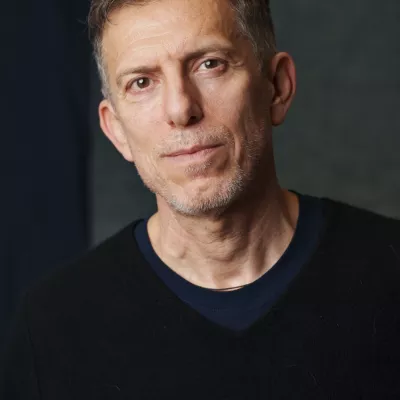
Galin Stoev
Theatre Actor and Director, Former Artistic director of the Théâtre de la Cité – CDN Toulouse Occitanie (France)
Born in Bulgaria, Galin Stoev graduated from the National Academy for Theatre and Film Arts in Sofia. He began working as a theatre director and actor in 1991. His early productions focused on classical playwrights, including Corneille, Strindberg, Shakespeare, Aeschylus, Büchner, Brecht and Musset, before gradually expanding to contemporary writers such as Yukio Mishima, Harold Pinter, Tom Stoppard and Philip Ridley.
His early career took him to theatres across Europe and beyond, including London, Leeds, Bochum, Stuttgart and Buenos Aires, where he directed a number of productions. A pivotal encounter in his artistic journey came in 2002, when he met Ivan Viripaev. He directed Viripaev’s first play, Dreams, followed by the Bulgarian version of Oxygen. Invited to Brussels in 2002, he staged the French-language version of the same play, before directing Genesis No. 2 in 2005, notably presented at the 61st Festival d’Avignon.
Alongside his directing career, Stoev has taught at St Martin’s College of Art and Design in London, the Arden School of Theatre in Manchester, and the national conservatories of Ljubljana and Sofia. His teaching practice also includes masterclasses at institutions and organisations such as ARTA and ESAD in Paris, La Réplique in Marseille, NATFA in Sofia and Territoria in Moscow.
In film, he directed the feature The Infinite Garden in 2017. In 2024, he appeared in Nina Roza, a feature film directed by Geneviève Dulude-De Celles, in which he plays the lead role. The film received the Silver Bear for Best Screenplay at the 2026 Berlin International Film Festival and was selected as Canada’s submission for the Academy Awards.
In 2019, Galin Stoev was appointed Chevalier of the Ordre des Arts et des Lettres by the French Republic.
Photo credit: Adriana Yankoulova
Panel 1: Public Theatre in a Changing Europe: Between Identity, Responsibility and European Collaboration
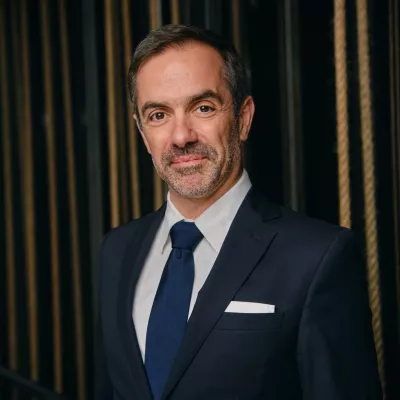
Rui Catarino
President of the Executive Board of Teatro Nacional D. Maria II and Lecturer in Arts Management at Lisbon Theatre and Film School (Lisbon/Portugal)
Rui Catarino is President of the Executive Board of Portugal’s D. Maria II National Theatre, a position he has held since 2022, following six years as a board member. He also lectures in Arts Management at the Lisbon Theatre and Film School, where he has taught since 2008.
His career spans more than 25 years in arts management, supporting artistic creation, expanding participation and strengthening cultural democracy. He has held leadership and management roles at Guimarães 2012 European Capital of Culture, the Serralves Foundation, Portugal’s National Opera and Ballet, São Luiz Municipal Theatre and EGEAC, Lisbon’s municipal cultural company. He has also advised the Portuguese Secretary of State for Culture and Lisbon’s Councillor for Culture.
His professional and academic interests include the public role of cultural institutions, access and participation, and working conditions in the cultural sector. He represents D. Maria II National Theatre on the board of Performart, Portugal’s performing arts association.
Rui Catarino holds a degree in Economics from ISEG and a postgraduate qualification in Arts Management from ISCTE, where he is pursuing a Ph.D. in Public Policy focused on cultural workers’ social protection. He is an alumnus of the DeVos Institute of Arts and Nonprofit Management fellowship programme in Washington, D.C.
Photo credit: Filipe Ferreira
Panel 1: Public Theatre in a Changing Europe: Between Identity, Responsibility and European Collaboration

Zuzana Hekel
Director at Divadlo Jána Palárika (Trnava/Slovakia)
Hekel graduated from the Theatre Faculty of the Academy of Performing Arts in Bratislava (VŠMU) in 2010. She worked as a dramaturg at Bratislava’s Aréna Theatre for five seasons. Since 2015, she headed the Department of Tourism and Culture at the Bratislava Self-Governing Region. Under her leadership, the Bratislava Regional Grant Scheme (BRDS) was established, becoming the first regional grant programme in Slovakia supporting culture through a transparent evaluation process. Zuzana Hekel is also actively involved in artistic work in the fields of theatre and film and works as a translator of theatre plays from English and French. Since September 2018, she has been the Director of the Ján Palárik Theatre in Trnava.
Panel 1: Public Theatre in a Changing Europe: Between Identity, Responsibility and European Collaboration
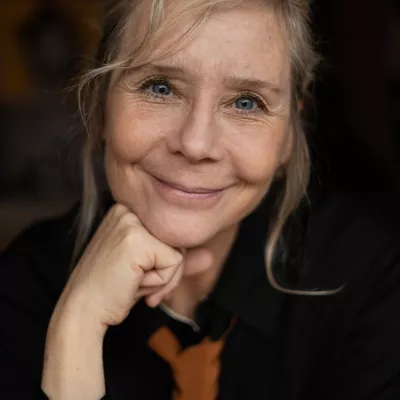
Lotta Lekvall
CEO of Folkteatern Göteborg and ETC Board Member (Gothenburg/Sweden)
Lotta Lekvall is Director/CEO at Folkteatern, a theatre based in Göteborg, Sweden, since 2015 and works together with Artistic Director Frida Röhl. Folkteatern has had an incredible development artistically, organizationally, audience development and ticket sales, strengthened economy and marketing strategies. Folkteatern has had several successes artistically as well as in audience and critics response. It’s an award-winning theatre with the plays Hamlet, Ett drömspel, and Bobby Fischer bor I Pasadena. Folkteatern has also been nominated to the Theatre Critics Price for the development and changes at the theatre and in marketing and communication as well as mentioned in The Guardian (February 8, 2020) for being a high-quality theatre and contributing to the area being chosen as one of the ten coolest neighbourhoods in Europe. Lotta Lekvall has attended the one-year programme Executive Diploma in Organisational Leadership, Oxford University, in 2023, and published the book “Performing Arts Leadership. Challenges in the 21st Century” (2024). She was nominated the twenty-fifth (out of a hundred) most influential persons in the city of Göteborg by the daily Göteborgs-Posten in 2023 for saving the theatre from eviction from the localities in the centre of the city.
Lotta Lekvall has worked with art and culture most of her life. She is a former Director of Nätverkstan, an independent cultural and civil society organization. Lotta Lekvall has worked in a broad sense with education, international exchange projects, surveys and studies on local, regional and national level. She has been on the board of The Royal Opera House in Stockholm, The Arts Grant Committee in Sweden, The Council of Cultural and Creative Industries, the network Encatc based in Brussels to name a few. She is the Chair of the board of Swedish Centre of International Theatre Institute since May 2025, and a board member of a small publishing house Tranan as well as TeaterAlliansen, a solution for mobility and security in the performing arts field. She has been co-author of several reports and books, and performed studies of both an opera house and concert hall, as well as worked with several projects and advisory roles in cultural and creative industries. She has long experience of artist exchanges as well as training around Europe as well as building long-term networks, exchanges, and training with colleagues in for example in India, Serbia, East-Africa and Georgia.
Panel 1: Public Theatre in a Changing Europe: Between Identity, Responsibility and European Collaboration
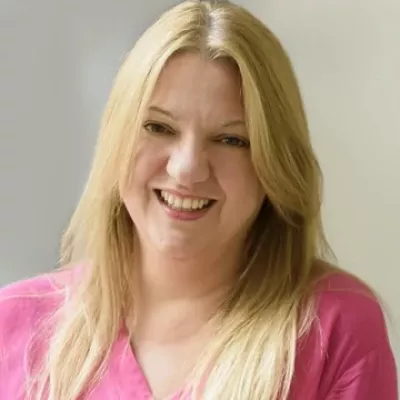
Irene Moundraki
Head Dramaturg, Head of Archive, Library and International Collaborations Department, National Theatre of Greece, ETC Board Member (Athens/Greece)
Irene Moundraki has obtained a BA, an MA and a PhD in Theatre Studies from the National and Kapodistrian University of Athens (Faculty of Theatre Studies). She also studied Arts at the University of Milan, Italy.
She has worked at the National Theatre of Greece since 1999 as a special artistic collaborator and she is head of Drama, Library, Archive and International Relations Departments.
Irene Moundraki is also a visiting professor at the Departments of Theatre Studies of the Universities of Athens and Peloponnese. She teaches History of Theatre and Dramaturgy at Drama Schools. She taught Theatre in the Army (SAN) for five years and has directed several plays with her students.
She is the founder and head of the Greek Play Project, a dynamic platform in Greek and English for the promotion and study of contemporary Greek theatre.
Panel 1: Public Theatre in a Changing Europe: Between Identity, Responsibility and European Collaboration
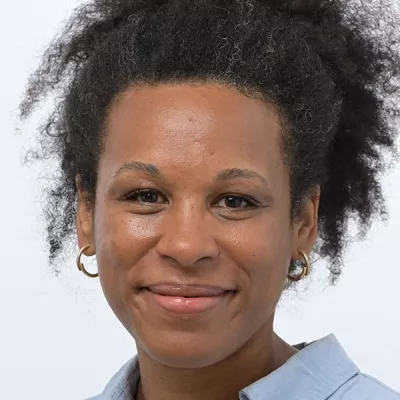
Nela Riehl
Member of the European Parliament, Chair of the Committee for Culture and Education (Brussels/Belgium) - Video Input
Nela Riehl is a Member of the European Parliament and Chair of the Committee on Culture and Education (CULT). Born and raised in Hamburg in a working-class family with roots in Germany and Ghana, she brings a personal perspective to European politics shaped by her early experiences with border controls across Europe. Committed to strengthening democracy through inclusive representation, Riehl advocates for a Europe that draws strength from diversity and pursues a climate-neutral, innovative, and just future.
Panel 1: Public Theatre in a Changing Europe: Between Identity, Responsibility and European Collaboration
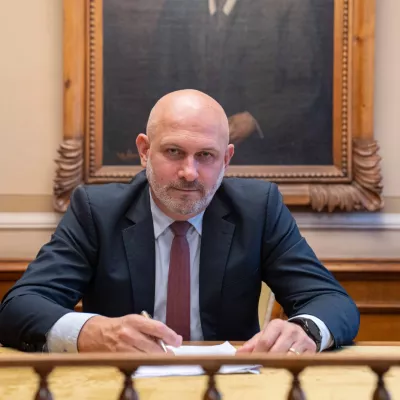
Vasil Vasilev
General Director of National Theatre Ivan Vazov (Sofia/Bulgaria)
Vasil Vasilev is a Bulgarian theatre director, theatre manager, and public figure with extensive experience in cultural policy and management. He holds Master's degrees in Theatre Directing from the Kr. Sarafov National Academy of Theatre and Film Arts and Business Management from the D. A. Tsenov Academy of Economics.
As a director, Vasilev has staged over 20 performances across various theatres in Bulgaria, as well as at the National Theatre of Nis in Serbia and Anton Panov National Theatre in Strumica, North Macedonia and National Institution Albanian Theater in Skopje, North Macedonia.
Since 2006, he has managed the Drama Theatres in Lovech and Pleven (Bulgaria) for two consecutive terms. As a result, he successfully turned them into modern and active theatre institutes for the period bringing their work into an international context. In the period 2013-2014 Vasilev served as Deputy Minister of Culture. In April 2022 he became the Director of the Ivan Vazov National Theatre, Sofia (Bulgaria).
Panel 1: Public Theatre in a Changing Europe: Between Identity, Responsibility and European Collaboration
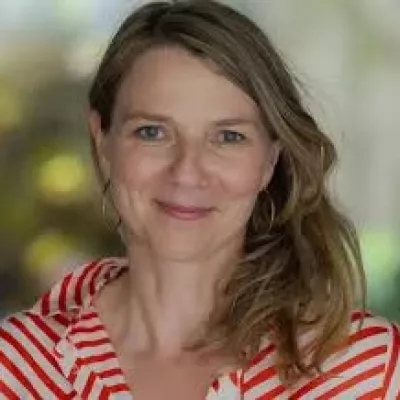
Heidi Wiley
Executive Director of European Theatre Convention (Berlin/Germany)
Heidi Wiley is a leading voice in European culture and a passionate advocate for the power of theatre to connect people, strengthen democracy and shape a more sustainable future. As Executive Director of the European Theatre Convention (ETC) since 2009, she has sparked a transformation in the sector. Under her leadership, ETC has become Europe’s largest network of leading public theatres, bringing together more than 80 major theatres in 33 countries. Beyond the numbers, ETC has expanded its role as a catalyst for artistic collaboration, professional development and cultural policy, helping theatres across Europe respond to the challenges of a changing world.
Heidi has played a central role in advancing theatre’s place on the European political agenda. She has worked closely with the European Commission, the European Parliament and other international institutions, and collaborated with the European Commission and the German EU Council Presidency to create and curate the first two editions of the European Theatre Forum, helping to shape a long-term policy framework for the sector. ETC has also become a strategic partner of the European Commission and received several prestigious awards, including the 2022 Art Explora – Académie des Beaux-Arts European Award for innovation in access to culture.
Her work extends beyond the stage to some of the most pressing questions facing society today: artistic freedom, sustainability, diversity and the impact of new technologies. ETC has helped pioneer initiatives such as the international campaign for artistic freedom, Resistance Now! Together and is advocating for a European Artistic Freedom Act. She also serves on the Board of Directors of Theatre Green Book Limited, supporting the transition towards more sustainable theatre practices internationally. She has been selected as an expert author and advisor for numerous research initiatives, including the EU Study ‘The situation of Theatres in the EU Member States’, and the European Expert Network on Culture and Audiovisual (EENCA).
An experienced speaker at cultural and policy events across Europe and beyond, Heidi brings a distinctive perspective on the role of culture in international cooperation, democratic resilience and social transformation. Her work is driven by the conviction that theatre is not only an art form, but a vital public space where people can encounter different perspectives and imagine a shared future. Trained as a cultural manager, she holds degrees from La Sorbonne and Leuphana University and has lived and worked for the last 25 years in the UK, US, France and Germany. She started her career as an international producer and touring manager for artists Victoria Chaplin and the Tiger Lillies, touring around Europe and Asia at major festivals and theatre venues.
Panel 1: Public Theatre in a Changing Europe: Between Identity, Responsibility and European Collaboration
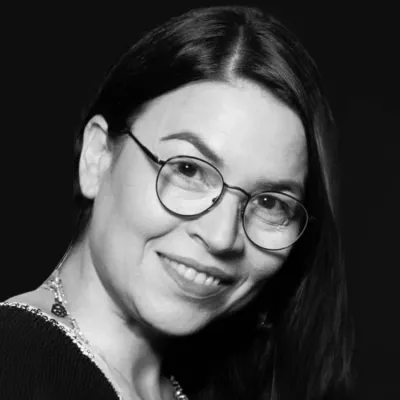
Marina Maleni
General Director of Cyprus Theatre Organisation (THOC) and ETC Board Member (Nicosia/Cyprus)
Marina Maleni has worked successfully as an actress, TV host and radio music producer for several years before 2001, when she started her work as Theatre Development Officer for Cyprus Theatre Organisation. In charge of State theatre subsidies and policy forming for two decades, European collaborations, playwriting development, non-professional theatre, theatre education programmes, festivals, and the Curator for PQ National Participation of Cyprus since 2007 (Golden Triga 2023). Additionally, Marina hosted a prominent CYBC TV talk show focused on culture for six years.
Marina Maleni has worked extensively in the Committee for Theatre in Schools (THOC - Ministry of Education and Culture, is a member of the advisory body of the Cyprus Youth Board, a Board member of the Cyprus Theatre Museum, is an honorary member of the Board of CYCSTAT and ASSITEJ Cyprus and is a member of the Advisory Board of World Stage Design. She has coordinated several very successful European culture program collaborations for Cyprus. She has been a Member of the Board of the European Theatre Convention since November 2023.
Deep Dive Roundtable: Table 1 – Artistic Freedom in an Age of Political Distrust
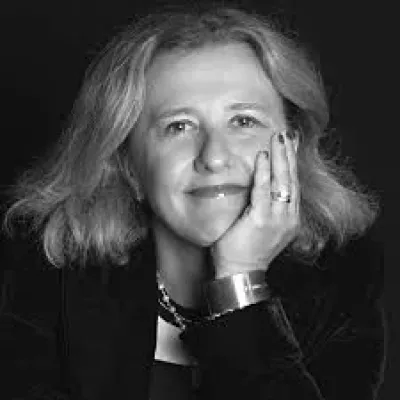
Barbara Ferrato
Head of Artistic, Planning and Development Department of Fondazione del Teatro Stabile di Torino - Teatro Nazionale and ETC Board Member (Torino/Italy)
Barbara Ferrato graduated in classical literature, with a cross-curricular thesis on the history of the theatre and classical Greek literature in Milan. She has obtained a Master's Degree in Organisation and Distribution of Theatre Productions at the Piccolo Teatro/Teatro d’Europa directed by Giorgio Strehler, where she started her career that proceeded in other theatres in Milan.
In 2002 she began to work for the TST/NT, first at the Regional Circuit of Piedmont (40 theatres) and then became the head of the artistic, planning and development department under the direction of Mario Martone and now Valerio Binasco.
Deep Dive Roundtable: Table 3 - From Networks to Solidarity: What Can European Theatres Do Together?
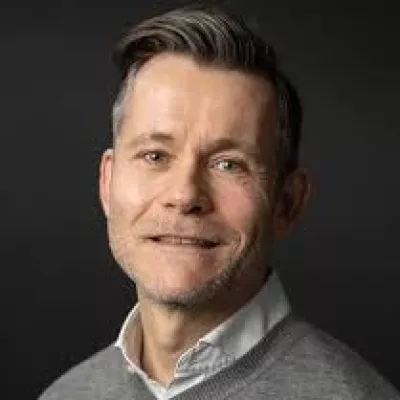
Tom Leick-Burns
Artistic Director and General Manager of Les Théâtres de la Ville de Luxembourg and ETC Vice-President (Luxembourg City/Luxembourg)
Born in Luxembourg, Tom Leick-Burns trained as an actor at the Drama Centre London. He has worked extensively in both theatre and film before joining the team of the Grand Théâtre in 2006. He completed an MBA at the Sacred Heart University in 2012 and was appointed artistic director of the Théâtres de la Ville in 2015. The artistic vision of the institution is focused on international collaboration through co-productions and participation in networks and European projects (enoa, ETC, Future Laboratory) and talent development with platforms such as TalentLAB (launched in 2016) and Capucins Libre (launched in 2018), designed to meet the real needs of local artists.
Split Sessions: DoSel - Drama of Smaller European Languages Workshop
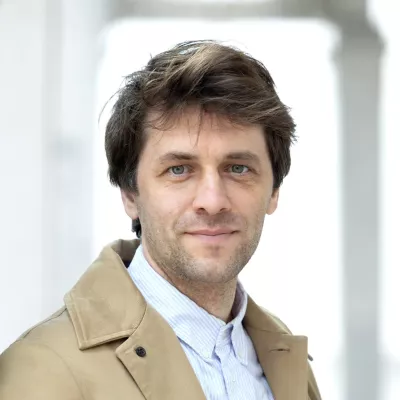
Rok Bozovičar
General Manager of Prešeren Theatre Kranj, Project Lead of DoSEL (Kranj/Slovenia)
Rok Bozovičar graduated from the UL Faculty of Arts in philosophy and comparative literature and continued his doctoral studies at the Faculty of Philology, University of Belgrade. Since 2012, he has worked as a theatre critic, first for Radio Študent and then as a critic and a journalist for Radio Slovenia, Dnevnik newspaper and the portal Kritika. He is also an editor, writer, moderator and dramaturg. In 2021, he co-edited the performing arts journal Maska and the web portal Neodvisni.art. He was the selector of the 55th Maribor Theatre Festival (2020), the 11th Biennial of Puppetry Artists of Slovenia (2021) and the 53rd Week of Slovenian Drama (2023). He has also been a member of expert juries and commissions (Prešeren Award, Ministry of Culture of the Republic of Slovenia, The Week of Slovenian Drama). From 2025 he is a managing director of Prešeren Theatre Kranj, which is the leading partner of Drama of Smaller European Languages project.
Split Sessions: Accessible Artistic Programmes: Beyond Ramps and Accessible Toilets
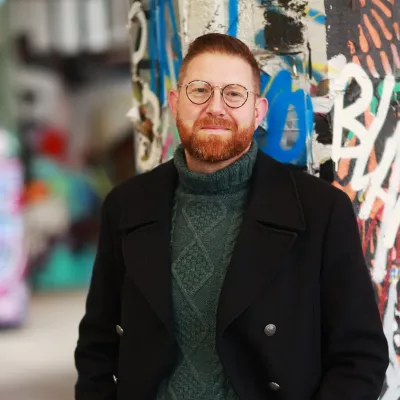
Ben Evans
Project Director of Europe Beyond Access (London/UK)
Ben Evans (he/him) is the Project Director of Europe Beyond Access (EBA). A disabled arts manager, Ben is the President of the European Arts & Disability Cluster, and is also an independent Accessible Culture policy consultant and advocate. Ben started his career working as a theatre director, later becoming Director of Theatre at London's Ovalhouse – a theatre with a rich tradition of supporting emerging artists who sit outside of mainstream culture: including artists of colour, Deaf and disabled artists, and LGBTQ+ artists. Ben subsequently became creative director of BeCreative, an independent production company with projects including producing the inaugural Lagos Theatre Festival in Nigeria. Ben worked for the British Council for 11 years, with roles including within the specialist Theatre & Dance team, as Head of Arts in Portugal, and for 8 years as Head of Arts & Disability, Europe.
Photo credit: James Keates
Split Sessions: European Actors

Jonathan Silén
Actor, Filmmaker, and Founder of Tablå (Stockholm/Sweden)
Jonathan Silén is a Swedish actor, screenwriter and film producer nominated for Sweden's most prestigious film award. He stands with one foot in resistance to AI and the other in building it. He is active in the Swedish movement warning about the risks of AI and has done a presentation on the subject for the World Economic Forum in Davos. He explores these concerns in concrete artistic work, such as Folk Nation with Frida Rohl at Folkteatern in Göteborg, and his feature film Push the Button, premiering soon, about shutting down the internet to stop the algorithm.
He is also developing Tablå, an AI-native platform that aims to replace a theatre's twenty different programs with one remarkably simple system. Like a brilliant stage manager, it knows everything about the organisation. Lighting, scheduling, marketing and ticketing are planned and visualised in one place, with an AI engine at its core.
Keynote
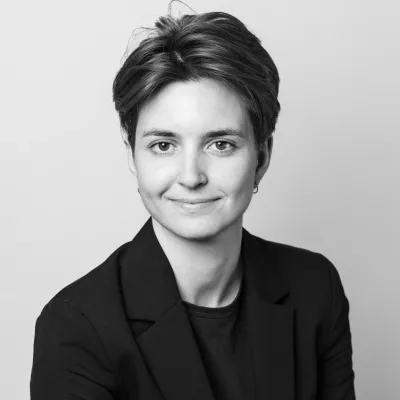
Sarah Nicole
Lecturer at Sciences Po (Paris/France)
Sarah Nicole teaches critical thinking in the age of AI at Sciences Po Paris. Previously, she has contributed to the strategic work of Microsoft, Huawei, and the Project Liberty Institute. A specialist in emerging technologies, including artificial intelligence, open-source and decentralized systems, she is a regular contributor to international public debate. Her expertise in critical digital technologies and data governance is frequently sought by organizations including the European Commission, the G20, and the OECD.
Panel 2: How AI Is Changing the Way We Make Theatre
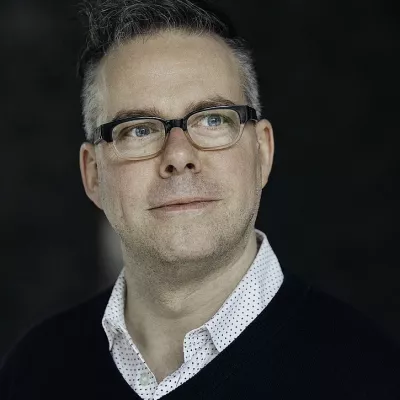
Marcus Lobbes
Director of Academy for Theatre and Digitality (Dortmund/Germany)
Marcus Lobbes is in high demand locally, nationally, and internationally for lectures and panel discussions; he is particularly committed to building and fostering a wide variety of networks for the performing arts, as well as to communicating artistic research, in dialogue with the latest technologies, to theatre and educational institutions, policymakers, and audiences. He is also active on numerous committees, boards of trustees, and juries; for example, he has served as vice president of the German Academy of Performing Arts and as a member of the board of trustees for the Performing Arts Fund. Since 1995, he has worked as a director, set and costume designer in drama and opera. He has also been invited as a guest lecturer and speaker at a wide variety of universities and colleges, including annually at the University of Music and Performing Arts Graz since 2016.
Photo credit: Susanne Diesner
Panel 2: How AI Is Changing the Way We Make Theatre
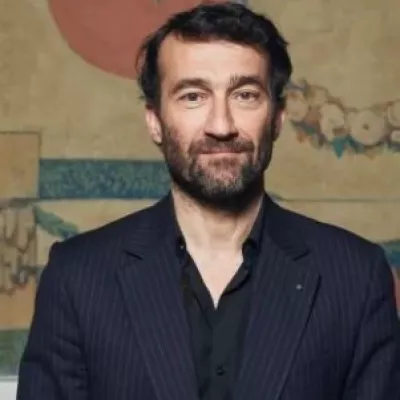
Pierre Lungheretti
Deputy Director and General Administrator of Chaillot – Théâtre national de la Danse (Paris/France)
Pierre Lungheretti began his education at the University of Paris III Sorbonne Nouvelle, where he obtained a DEA (post-graduate diploma) in British literature and civilisation, followed by a DESS (post-graduate diploma) in publishing at the University of Paris XIII Villetaneuse. In the early 2000s, he won the competitive examination for territorial administrator as a student-administrator at the Institut National des Etudes Territoriales (INET) in Strasbourg.
After serving as Director of the Kallisté Theatre and Director of Cultural Affairs for the City of Ajaccio, he was appointed Deputy Director General of Services for the City of Rennes, in charge of culture and sports, then in charge of culture and Director of Cultural Affairs for the Rennes Métropole urban community. He joined Frédéric Mitterrand's cabinet in July 2009. Working for the Minister of Culture and Communication, he successively held the positions of Adviser, with particular responsibility for performing arts, Deputy Director and then Director of the Cabinet, before becoming Head of Department, Deputy to the General Director of Artistic Creation at the Ministry.
From 2013 to 2015, he provided expertise and advice to the Minister of Culture of the Republic of Albania, before becoming Director General of Cultural Affairs for the Poitou-Charentes region in May 2015. In January 2016, he became Director General of the Cité internationale de la bande dessinée et de l'image (Cibdi) in Angoulême. He was then the author of the ministerial report La bande dessinée, nouvelle frontière artistique et culturelle, commissioned in February 2018 by Françoise Nyssen, Minister of Culture, and submitted to her successor Franck Riester in January 2019, giving rise to the Year of the Comic Strip 2020-21. At the same time, he was President of CCN2 - Centre chorégraphique national de Grenoble from 2016 to 2020. Pierre Lungheretti joined the teams at Chaillot - Théâtre national de la Danse in January 2022 as Associate Director alongside Rachid Ouramdane.
Photo credit: Michaël Huard
Panel 2: How AI Is Changing the Way We Make Theatre
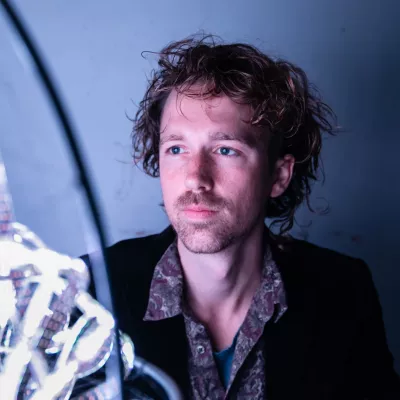
Birk Schmithüsen
Media Artist, Producer, and Co-Founder of ArtesMobiles (Leipzig/Germany)
Birk Schmithüsen is a media artist and co-founder of the theatre and performance company ArtesMobiles. His audiovisual installations and immersive social experiments examine the social impact of technical developments – AI, surveillance, automated governance. He is an alumnus of the Academy for Theatre and Digitality, co-curates the art exhibition of the Chaos Communication Congress and has shown his work at FILE Festival in São Paulo, Ars Electronica Festival and ZKM, among others.
At ArtesMobiles he is responsible for concept and audiovisual direction: he builds digital stage worlds that react live to performers and audiences. In SystemFailed (2022) the audience becomes part of digital governance – it makes decisions and experiences their consequences, rebels against the machine or follows it. Versuch über die nachhaltige Ordnung merkwürdiger Dinge (An Essay on the Sustainable Order of Curious Things, 2026) leads the audience in small groups through the backstage rooms of Stadttheater Gießen, from scene to scene, and ends on the main stage. Ten chatbots, shaped from interviews with the people who make the theatre run, make the voices of the props audible. Productions by ArtesMobiles have been presented at the festival Politik im Freien Theater (2022), at HELLERAU Dresden (2021) and at the Kultur Digital Kongress of the German Federal Cultural Foundation at Zollverein (2023), among others.
Birk Schmithüsen has worked with machine learning since 2018. In workshops for artists, most recently at Teatro Stabile del Veneto, the national theatre in Padua, participants try out custom-built tools and develop a critical stance on AI and authorship. His critique comes from the inside, from systems he works with every day. He builds agentic AI systems that relieve organisations of administrative work, running on local, European infrastructure – and calls on theatres and independent groups to pool their computing capacity in a decentralised network.
Laboratories: Digital Theatre
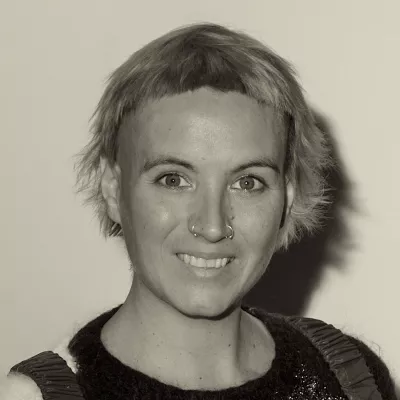
Nina Maria Stemberger
Theatre Director, Performer, Curator and Theatre Pedagogue Co-Founder of ArtesMobiles (Leipzig/Germany)
Nina Maria Stemberger is a director, performance artist, curator and theatre educator. Her productions explore the relationship between humans and technology, the search for identity and the future of society. Her artistic practice is shaped by an interdisciplinary approach that connects dance, theatre and technology. She enjoys experimenting with new techniques and materials to create unique aesthetic experiences. Nina is open to creative challenges and is not afraid to cross conventional boundaries in order to explore new forms of expression. In 2022 she received a five-month fellowship at the Academy for Theatre and Digitality in Dortmund. In 2023, as an expert for AI in the performing arts, she supported the AICA project at the University of Music and Performing Arts Munich. Her production “SystemFailed” was invited to the festival Politik im freien Theater.
Photo credit: ArtesMobiles
Laboratories: Leading with Artistic Courage Workshop
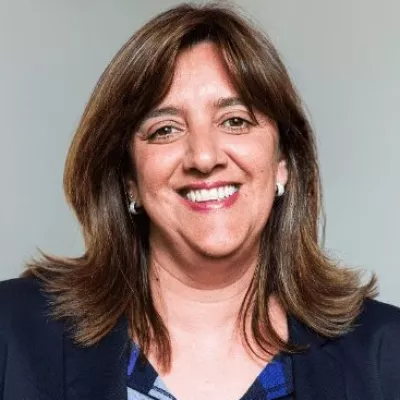
Cláudia Belchior
Executive General Coordinator of Centro Cultural de Belém and ETC President (Belém/Portugal)
Cláudia Belchior was the President of the Executive Board of the D. Maria II National Theatre in Lisbon, Portugal, a position she has held from July 2015 - June 2022. Cláudia has been involved with the performing arts for all of her career, at the foremost cultural institutions in Portugal, having served as Director, Coordinator for the Performing Arts, and Deputy Director for Planning and Budget at the Belém Cultural Centre and as Director of Production at the Gulbenkian Foundation. She is currently the executive general coordinator of Centro Cultural de Belém. She has taught courses in Production Management, Stage Management, and Technical Direction in several institutions.
Laboratories: Leading with Care Workshop
Katherine Dennis
Psychologist, Neuropsychologist and Co-founder of Expanding Circles (Berlin/Germany)
Katherine Dennis González is a psychologist, neuropsychologist and co-founder of Expanding Circles, a Berlin-based psychological education and movement company. With over 12 years of clinical practice, she works at the intersection of nervous system science and human behaviour, leading individual and corporate programmes and working with film festivals and institutions across Europe.
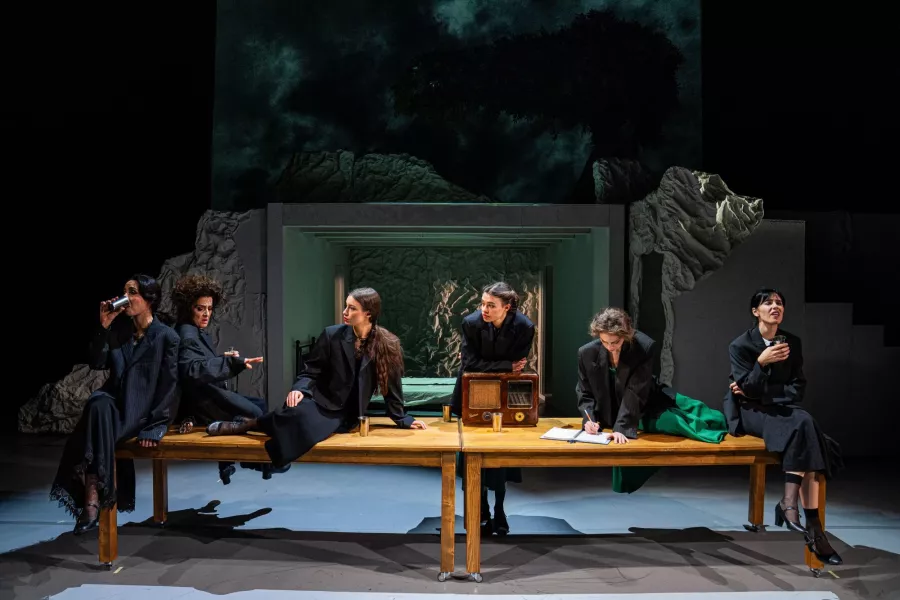
Little England
Stage adaptation based on the novel of the same name by Ioanna Karystiani.
Description:
Greece.
Two men. One island.
Between two wars.
One house. Two floors.
Two sisters. One secret.
A shattering epic.
A story about the furious courage with which you feed death, yet refuse to let it separate you from the one you have loved.
*
The performance “Little England” is the world theatrical premiere of the novel by Ioanna Karystiani.
The book won the Greek National Literary Award in 1998.
Information:
Genre: Drama
English subtitles
Duration: 02h30
Premiere: 15 - 16 April 2026
Production Team:
Author: Ioanna Karystiani
Director and author of the stage adaptation: Diana Dobreva
Dramatization: Alexander Sekulov
Translation: Emanuel Mutafov
Set and Costume Design: Marina Raychinova
Composer: Petya Dimanova
Choreographer: Olga Pango
Video Design: Petko Tanchev
Cast: Alexandra Svilenova, Ana Papadopoulou, Aneta Ivanova, Boryana Manoilova, Vasil Draganov, Veselin Mezekliev, Dimitar Nikolov, Zhana Rasheva, Ivan Nikolov, Irina Miteva, Konstantin Elenkov, Kremena Slavcheva, Lyubomir Petkashev, Stefan Kushev
TAM
Description:
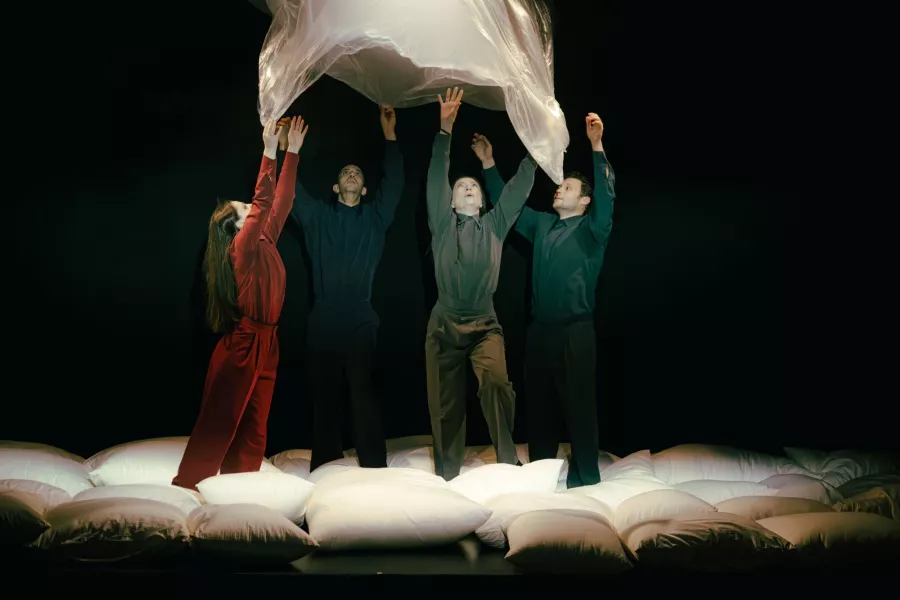
Island made of pillows
TAM is a performance-installation that explores how a sense of shelter can be created - not as a physical location, but as a shared state of being. A place that exists only as long as we are together. Bodies, voices, and presences weave into a common field of attention. TAM is not only a physical or imaginary space, but also an emotional and psychological refuge.
There is no safe place, no separation between stage and audience - only shared air, collective silence, and movement passing from one body to another. Light dissolves and drifts. Sound follows gesture. The voice merges with the material of the space. Every moment is different - the place changes, and we change with it.
TAM is an invitation to be. Simply to be present.
The concept of the locus amoenus - “the pleasant place” - carries universal meaning, reflecting the deeply rooted human need for a space of safety and rest for both body and mind. It is a refuge from the outer world, where we can withdraw in order to recover and reconnect - with ourselves and with others on a deeper level. It is a fragile, intimate space, easily disturbed, yet filled with the quiet intensity of shared moments we create within it.
The artistic concept of the project explores locus amoenus in the context of today’s world of dissonance. Its aim is to create an artistic space that not only allows but also invites the audience to examine their own notions of refuge, safety, and comfort - and how such a psycho-emotional state can be achieved and sustained.
Where lies the balance between reality and ideal - between the desire for utopian peace and the surrounding world?
What is your locus amoenus?
How can we build these places TAM, together?
Information:
Genre: Performance-installation
English libretto provided at the beginning of the performance
Duration: 01h15m
Premiere: November 20 and 21, 2025
Production Team:
Concept and Choreography: Deyan Georgiev
Assistant Choreographer: Bianca Braunesberger
Set and Costume Design: Gabriela Kurdjilova
Music: Petya Dimanova and Bozhidar Vasilev – Trombobby
Lighting Design: Viktor Georgiev
Visual Environment: Petko Tanchev
Cast: Snezhina Petrova, Yavor Valkanov, Kaloyan Trifonov, Vasilena Kaneva
The Physics of Sorrow
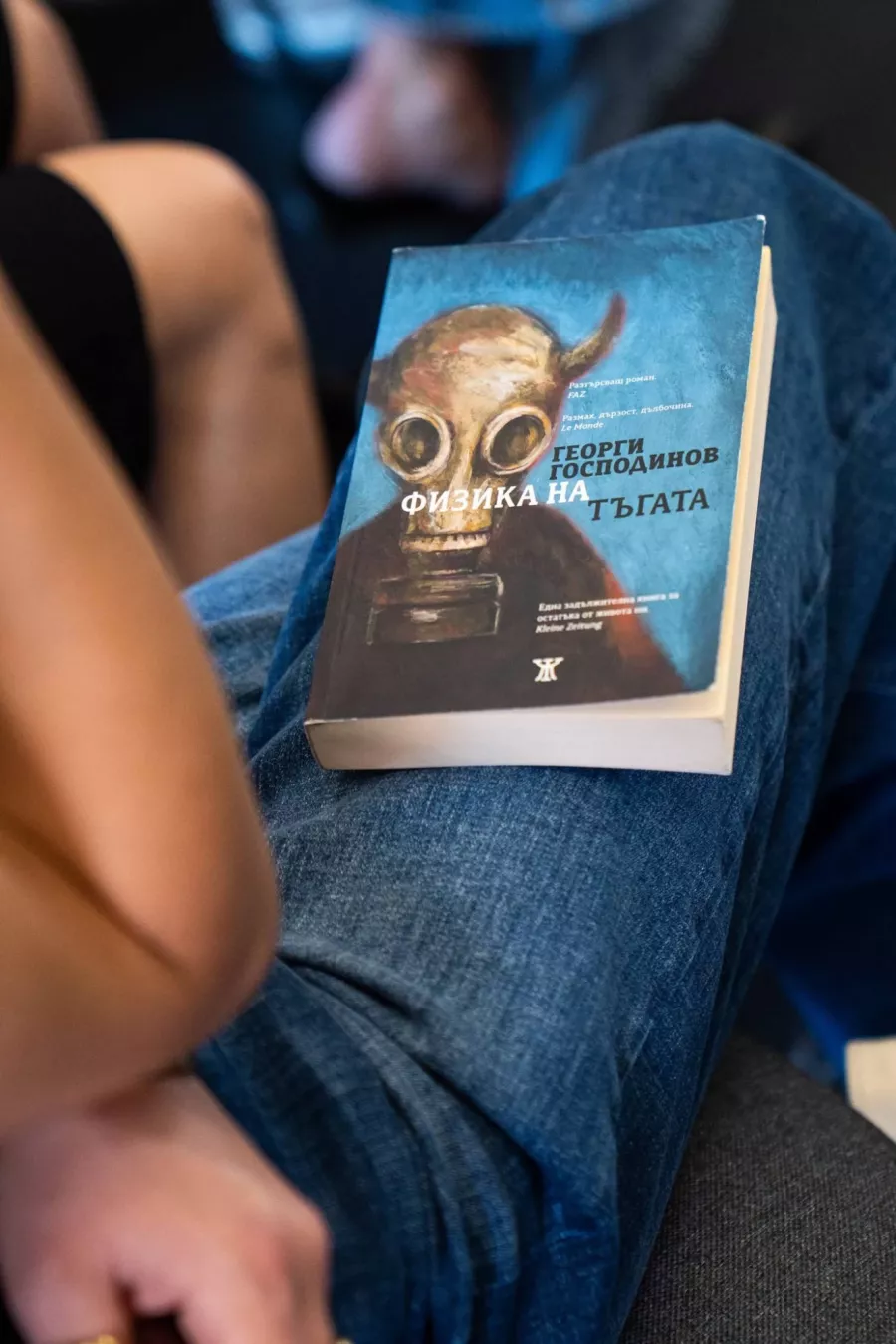
Based on the novel of the same name by Georgi Gospodinov.
Description:
For the second time, one of the most compelling figures in European theatre, Slovenian director Jernej Lorenci, will work with the company of the National Theatre. Following his production of Orpheus, Lorenci returns to Sofia to adapt Georgi Gospodinov’s novel The Physics of Sorrow (2012) for the stage. The novel has been translated into more than 20 languages. It won the prestigious international Jan Michalski Prize in 2016 and was shortlisted for the PEN American Award for translated literature, the Premio Strega Europeo, the Haus der Kulturen der Welt Award, the Gregor von Rezzori Prize and others. According to The New Yorker, Georgi’s true quest in The Physics of Sorrow is to find a way to live with sorrow, allowing it to become a source of empathy and beneficial hesitation. The short animated film The Physics of Sorrow, based on the novel and directed by Theodore Ushev, received numerous international awards and was shortlisted for the Academy Awards in 2020.
In the novel, time does not follow a chronological order; it is fragmented, cyclical and experienced from within. The Physics of Sorrow explores the ways in which human beings experience time, history and loss through memory, empathy and storytelling. In Saint Augustine’s understanding, time exists above all within human consciousness rather than as an objective flow. Past, present and future coexist; memory alters and bends time, while the present remains fragile and fleeting.
The book is structured as an archive, a suitcase or a labyrinth of memories. Personal recollections intertwine with family history and collective memory. Remembering becomes an ethical act—an attempt to preserve what would otherwise disappear. Memory is not a precise record of facts, but something unstable, fragmented and deeply emotional. Sorrow is not a weakness, but a form of knowledge—a quiet resistance to a present day obsessed with the pursuit of happiness at any cost. The novel is an elegy for everything that is gradually disappearing. Writing becomes an attempt to save what is on the verge of being lost forever.
Jernej Lorenci’s production creates a theatrical adaptation that transforms this literary labyrinth into a living stage world of memories, stories, images, voices and bodies. At its centre is the human being, trapped within their own labyrinth of past and future, fears and hopes, loneliness and longing for closeness. The myth of the Minotaur intertwines with personal and collective memory, while individual human destinies form a shared narrative about generations, lost time and our ability to feel another person’s pain as our own.
Through his deeply emotional and ritualistic theatrical language, Jernej Lorenci creates a production in which the ensemble becomes a single organism and the stage becomes a space for shared experience. Through music, personal stories, memories and collective presence, the actors search for what connects us beyond our differences: our shared humanity and our common present. A production about empathy as a form of resistance. About the human need to preserve the traces of the past and to dream the future together.
Because, as Georgi Gospodinov reminds us, after the end of the world, perhaps the most important thing is to open our arms and embrace one another.
Information:
English subtitles
Duration: 3 h with an intermission
Premiere: 6 and 7 October 2026
Production Team:
Author: Georgi Gospodinov
Director: Jernej Lorenci
Dramatisation: Dino Pešut and Jernej Lorenci
Set Designer: Branko Hojnik
Costume Designer: Belinda Radulović
Composer and Assistant Director: Žiga Hren
Cast: Albena Stavreva, Alexander Tonev, Aneta Ivanova, Valentin Ganev, Vasilena Vincenzo, Darina Radeva, Dimitar Nikolov, Veselin Mezekliev, Konstantin Elenkov, Paraskeva Djukelova, Radena Valkanova, Stelian Radev, Teodora Duhovnikova, Hristo Petkov
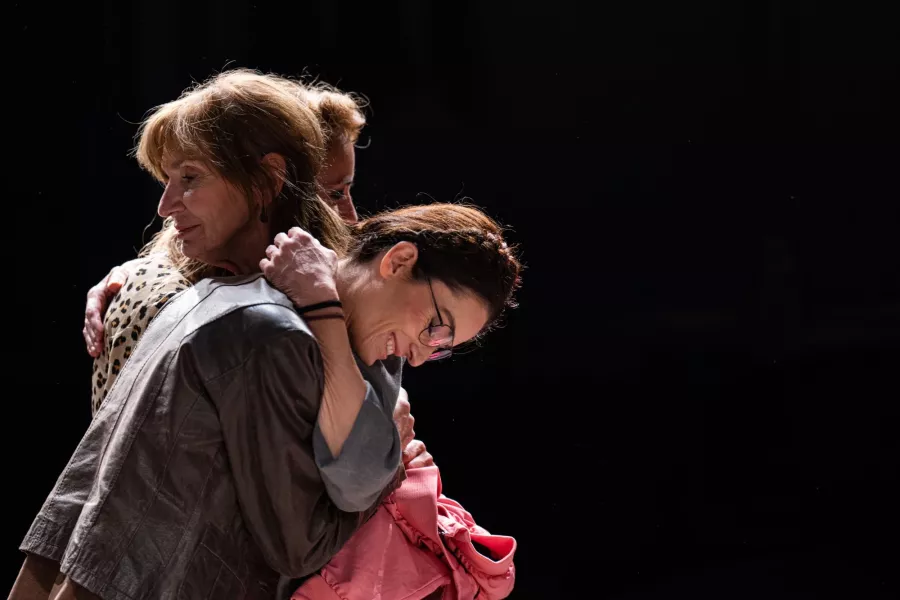
Pieces of a Woman
by Kata Weber
Description:
Born from playwright Kata Weber’s personal experience of trauma, Pieces of a Woman transforms intimate suffering into a powerful exploration of grief, love and survival. Chris Sharkov’s production examines how loss reshapes relationships and confronts some of the defining tensions of contemporary life: fear of the Other, the difficulty of living with pain, and the fragile, contradictory forms of love. Performed by a compelling ensemble from the Ivan Vazov National Theatre, the production places emotional truth and human vulnerability at its centre.
Information:
Genre: Drama
English subtitles
Duration: 01 h 30 m
Age restriction: Not suitable for persons under 18
Premiere: 7th and 8th of October 2022
Production Team:
Author: Kata Weber
Translation: Pravda Spasova
Director: Kris Sharkov
Set Design and Costumes: Nikola Toromanov
Music: Emilian Gatsov-Elbi
Cast: Radina Kardzhilova, Maria Kavardzhikova, Stefan Valdobrev, Martin Dimitrov, Ana Papadopulu, Tsvetan Aleksiev, Zhaklin Daskalova, Albena Stavreva
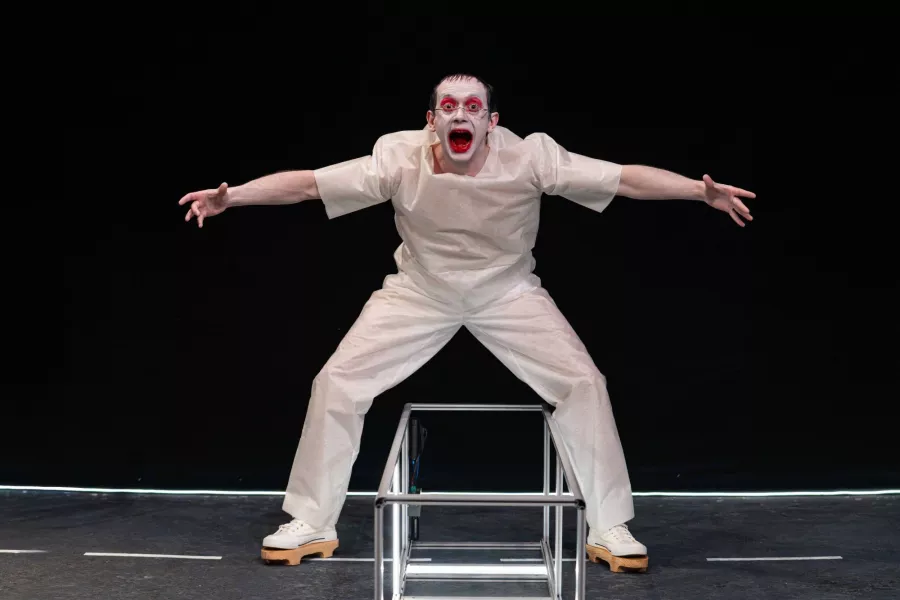
Convenience Store Woman
Stage adaptation based on the novel of the same name by Sayaka Murata.
Description:
Keiko has been strange since childhood. Every action of hers is governed by her own logic, which, however, does not fit into the overall model of society, whose rules she cannot comprehend. This is why she decides to withdraw into herself and imitate the behavior of those around her in order to be "normal" rather than a "foreign body." At age 18, she starts working in a konbini (convenience store) and discovers her earthly paradise. Konbinis are stores in Japan where you can find everything 24/7. They look the same everywhere; employees wear uniforms, and the service is standardized, using rehearsed and masterfully practiced phrases for customers. In this perfectly functioning mechanism, Keiko speaks and acts exactly as expected of her. To be a cog in the konbini machine is not just a means of survival for her, but an ideal of existence.
"Many themes are visible in Sayaka Murata's novel. The entire mechanism of human existence is mirrored in a 'foreign body.' And the konbini—the beating heart of buying and selling—paradoxically turns into a kind of Zen garden. All of this is presented with lightness, absurdity, and humor," says Mariy Rosen.
Information:
Genre: Dramatic comedy
English subtitles
Duration: 01 h 30 m
Age restriction: Not suitable for persons under 12
Premiere: January 31 and February 1, 2026
Production Team:
Author: Sayaka Murata
Translation: Margarita Ukegawa
Dramatization and direction: Mariy Rosen
Scenography and costumes: Petya Boyukova
Music and soundscape: Alexander Evtimov-Shamancheto
Movement and choreography: Yanitsa Atanasova
Cast: Boryana Yovcheva, Alexander Tonev
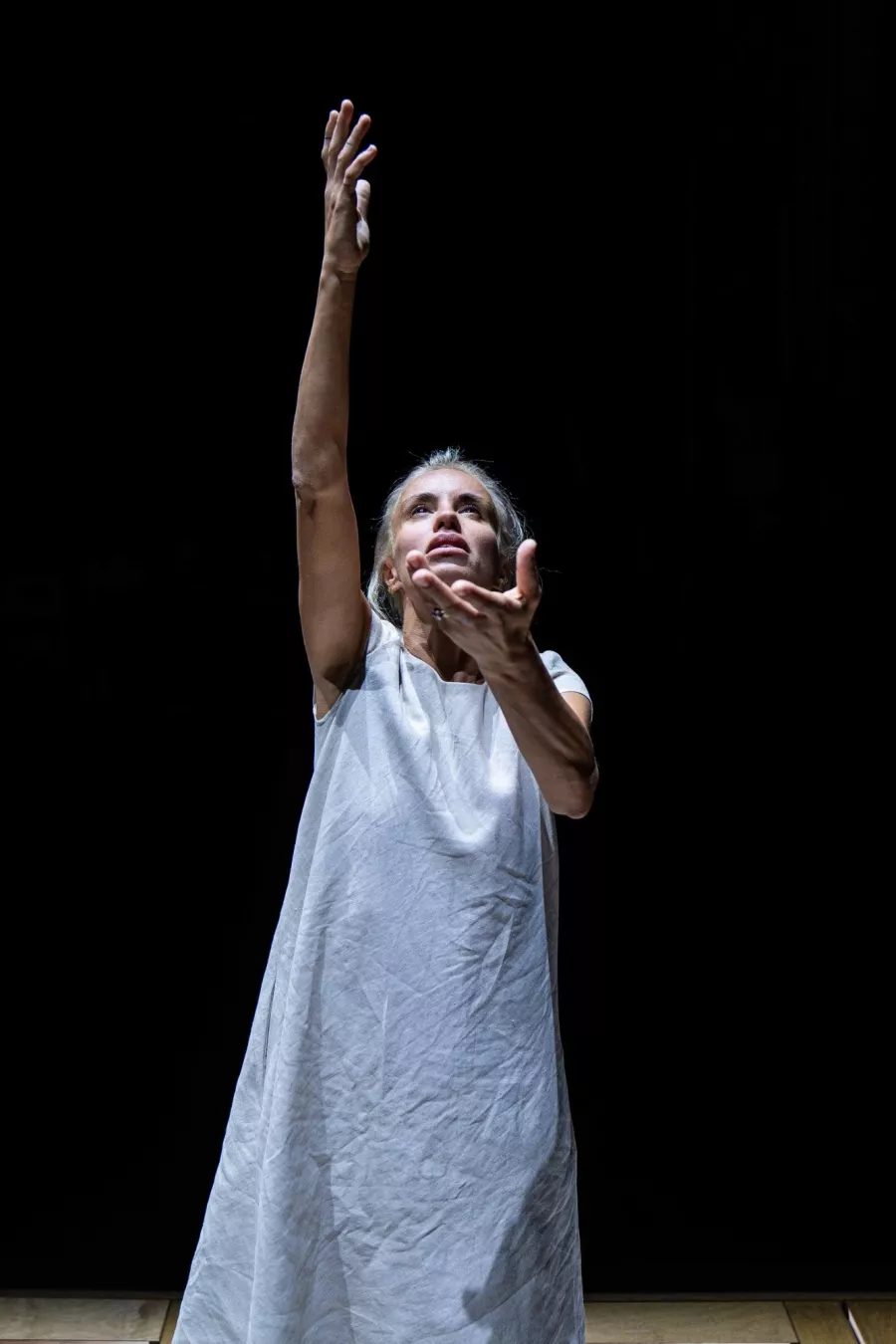
Medea
by Euripides
Description:
The name Medea can conjure up the image of a screaming murderous monster from antiquity. But Euripides brings Medea’s experience uncomfortably close to home. His Medea is a very real woman facing what to her seems an intolerable predicament. She fears she is facing total humiliation, which to her amounts to annihilation. Her solution is extreme but not unheard of in today's world. We think what she does is overly emotional and irrational, but in fact the appalling deed is the result of the application of strict logic. Maybe this is a timely warning to our world increasingly obsessed, as it is, with algorithms of efficiency and artificial intelligence, just to hang onto our common sense and ordinary decency at all costs. Logic is a good servant but a bad master.
Information:
Genre: Tragedy
English subtitles
Duration: 01 h 00 m
Premiere: 9, 10, 11 and 12 September 2024
The audience remains standing throughout the entire performance, positioned on the stage itself, while the actors perform among them.
Production Team:
Author: Euripides
Translation: Dorothea Tabakova
Director: Declan Donnellan
Designer: Nick Ormerod
Movement Director: Rosen Mihailov
Composer: Julian Stoichkov
Light designer: Ilya Pashnin
Cast: Radina Kardzhilova, Velislav Pavlov, Valentin Ganev, Asen Dankov, Yavor Valkanov, Stelian Radev, Vyara Tabakova, Radena Valkanova, Joreta Nikolova, Stafania Koleva, Elena Ivanova, Nadya Keranova, Ana Papadopolu and children Nikola Sarzhev and Petar Sardzhev (doubles Boris Petrishki and Boyan Chelebiev)