
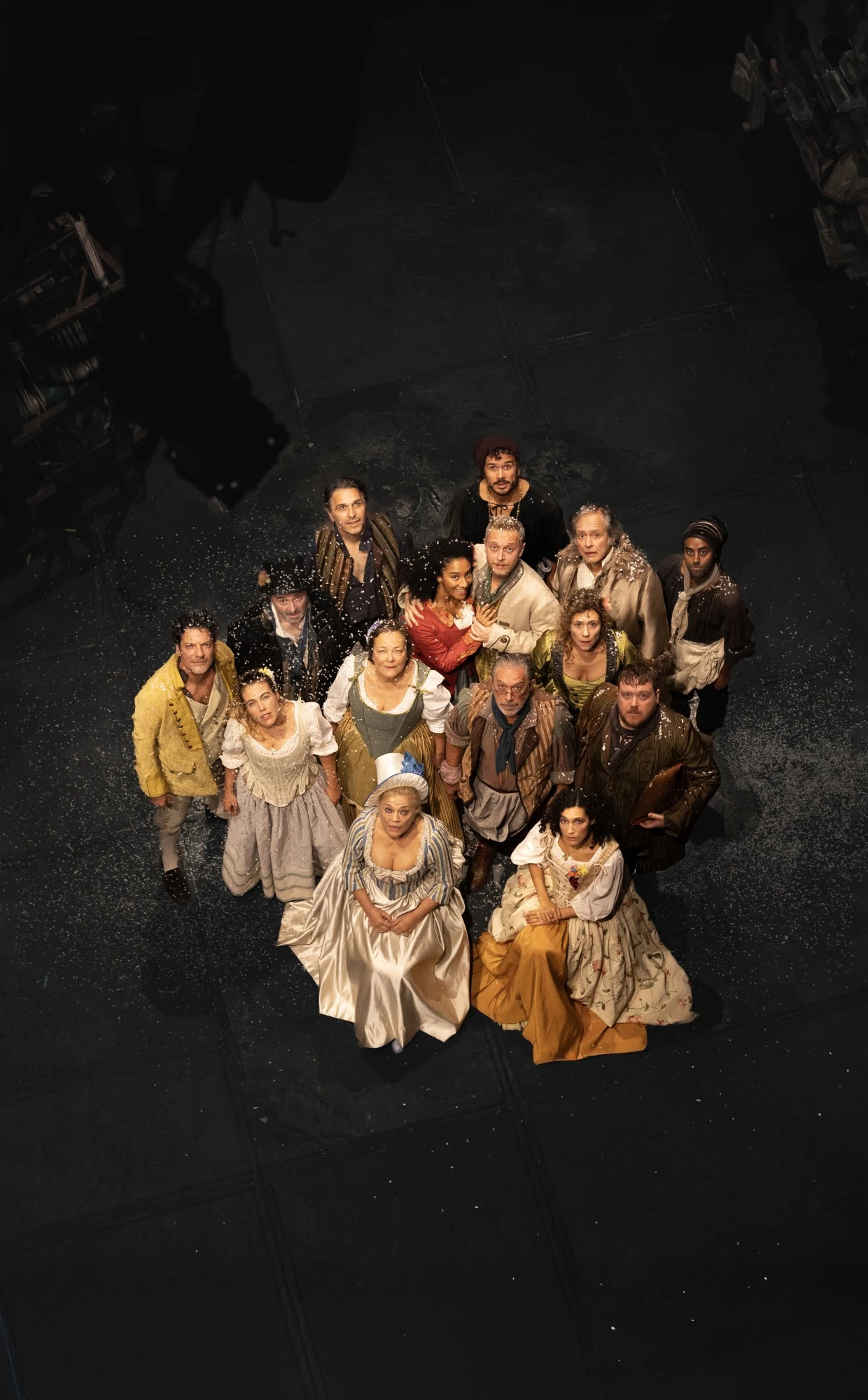
Teatro Stabile di Torino
5–25 October 2026 | World premiere and touring
Una Delle ultime sere di carnovale
One of the Last Evenings of Carnival
by Carlo Goldoni
with (in alphabetical order) Andreapietro Anselmi, Natalino Balasso, Mauro Bernardi, Marta Cortellazzo Wiel, Matteo Cremon, Michele Di Mauro, Giordana Faggiano, Milvia Marigliano, Daniele Marmi, Elisabetta Mazzullo, Orietta Notari, Nicola Pannelli, Cristina Parku, Aron Tewelde, Ivan Zerbinati
directed by Valerio Binasco
set design Guido Fiorato
costumes Alessio Rosati
lighting design Alessandro Verazzi
sound design Filippo Conti
first assistant director Eleonora Bentivoglio
second assistant director Andreapietro Anselmi
assistant set designer Anna Varaldo
assistant costume designer Alberto Allegretti
second assistant costume designer Mattia Tomatis
Teatro Stabile di Torino – Teatro Nazionale
Teatro di Roma – Teatro Nazionale
TSV Teatro Stabile Veneto – Teatro Nazionale
Teatro Stabile di Bolzano
with the support of Fondazione CRT
After Il bugiardo (The Liar) and Arlecchino servitore di due padroni (The Servant of Two Masters), Valerio Binasco returns to Carlo Goldoni with Una delle ultime sere di Carnovale, an affectionate yet painful farewell by the great playwright to his Venetian audience. For Binasco, however, Goldoni is more than a master of comedy: he is a keen observer of human nature, able to reveal, beneath the laughter, the truth of relationships, their hypocrisies and the small deceptions of everyday life.
Binasco, director and Artistic Director of Teatro Stabile di Torino, finds a surprising modernity in Goldoni. Comedy always stems from a vulnerability, from a kind of “pathology” of everyday life, and this is precisely why it continues to speak to us today. Arlecchino, Lelio and Anzoletto are both masks and men, living portraits of a humanity that never really changes.
In Binasco’s vision, the play becomes an act of love for theatre itself: a theatre that does not rest on the past or measure its worth by applause, but continues to question the present through the most direct and vital language of all—the language of the stage.
Valerio Binasco, Excerpt From Director’s Notes, I Quaderni Del Teatro Stabile Di Torino
Una delle ultime sere di Carnovale is an ensemble comedy. This is what appealed to me about it from the outset. The plot is simple: a party is being held, and numerous couples arrive. Not everyone knows that it is a farewell party. There are many married couples and couples hoping to marry, some more or less happy, others more or less sad.
The first subject Goldoni wants to explore is marriage. More precisely, marriage for love. Love has to hold its own within marriage; it has hard work to do. Yet Goldoni’s idea—a comic idea—is that, whatever happens, it is worth the effort. We watch these couples endure the trials of love along life’s difficult paths, and thanks to love, life is never entirely sad.
If marriage is the first theme, the second is leaving one’s homeland. The couples gathered at this somewhat tedious party weave together a web of stories. As the day draws to a close and Carnival comes to an end, after the last card game and the final dance, someone will leave for distant lands, perhaps never to return…
There is a sense of an ending in this comedy. Goldoni is one of those playwrights who allow themselves to be carried into our time. This must be done with delicacy, although for a director, delicacy is a gift that comes and goes.
Delicacy is essential to this play. It gently suggests an idea of love that withstands hardship, of marriage as a remedy for loneliness, and of emigration as the only possibility for personal and professional redemption.
In the world of comedy, people have always married in the end because they love each other, and for no other reason: they want to be together. The characters in this production must weather a few trials, but the ending is happy. That is all.
It is such a simple idea of love that it becomes deeply moving. The idea of marriage is already tinged with nostalgia, as though permeated by a gentle boredom. And yet that little bitterness of boredom so familiar in Chekhov seems, in Goldoni, to hold the secret of happiness. Perhaps it does.
One final thought: Carnovale speaks a great deal about love, but it is not a romantic comedy. Goldoni wastes no time being romantic or playing the poet of tormented souls. He knows what life is like. And he knows there is no time to waste on abstractions, because life is too difficult an experience.
Being in love with one’s spouse and sharing a harmonious life together is an extraordinarily precious gift, one that not everyone has: many lose it, and some will never experience it. And among those who do have it, not everyone knows how to protect and preserve it.
Being alone is a source of pain, a chronic melancholy. We need someone. All we need is love. As best we can.
Cover photo: Virginia Brown